

_id. The address is GET https://api.acedata.cloud/fish/model/{id}.
For creating voices, please refer to the Fish Model Create API; for paginated retrieval, please refer to the Fish Model Query API.
Application Process
To use the Fish Model API, first obtain your API Token from the Ace Data Cloud Console for future use.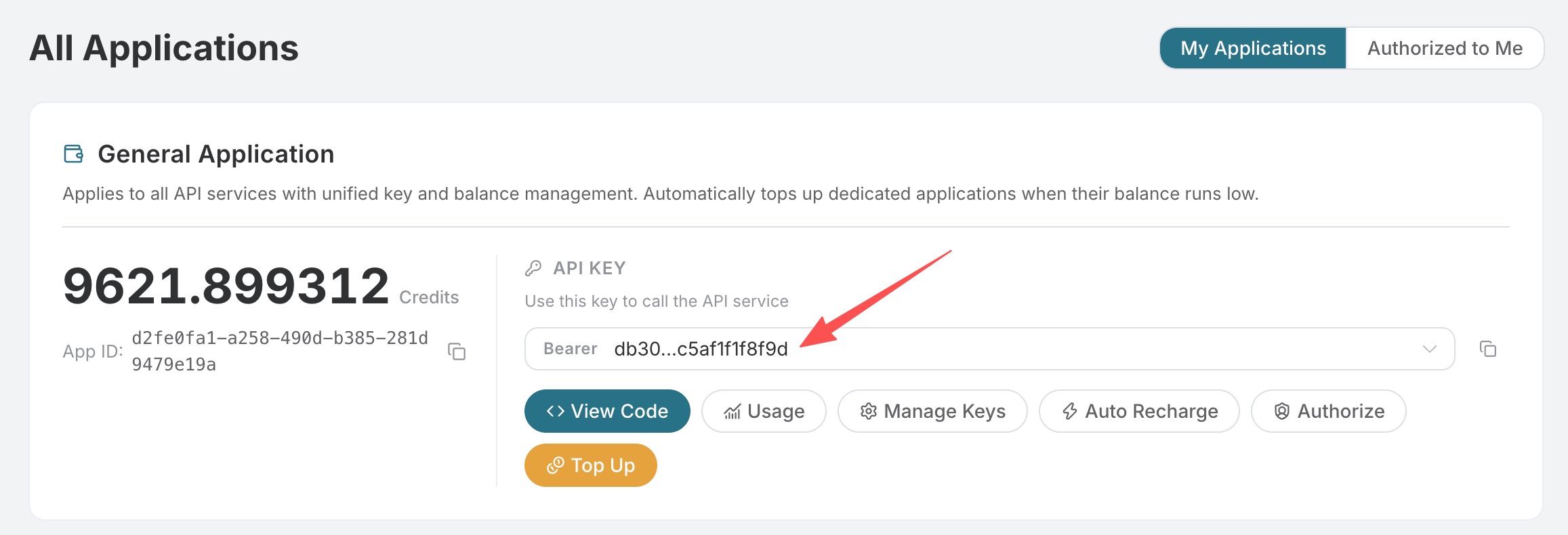 If you are not logged in or registered, you will be automatically redirected to the login page inviting you to register and log in, and will return to the current page upon completion.
One API Token can call all services on the platform, no need to apply separately for each service. The first application will grant a free quota for a trial experience; when the quota is insufficient, you can recharge the general balance in the console.
If you are not logged in or registered, you will be automatically redirected to the login page inviting you to register and log in, and will return to the current page upon completion.
One API Token can call all services on the platform, no need to apply separately for each service. The first application will grant a free quota for a trial experience; when the quota is insufficient, you can recharge the general balance in the console.
📘 Complete documentation: Fish Model API →
Path Parameters
No request body, no query parameters.
Example: Retrieve complete details of a public Spanish voice
samples[].audio for readability):
_id can be directly fed to the reference_id of Fish TTS to synthesize speech with the same voice:
Differences with List Interface
If you just want to listen, the
samples[].audio in the list interface is sufficient; for a more stable download link, it is recommended to use this interface.
Response Fields (Excerpt)
Billing Instructions
This interface is free of charge—querying the details of a single voice by ID is a free operation. Creating voices (Fish Model Create) is also free, and charges only occur when calling Fish TTS to synthesize speech based on usage.Error Handling
400 token_mismatched: Theidin the path is not in a valid format, or the upstream reports “Model not found”.401 invalid_token: The authentication token does not exist or is invalid.404 not_found: The specified_idis not visible upstream on Fish (the tone has been deleted, is private, or belongs to another account).429 too_many_requests: The account rate limit has been triggered.500 api_error: Internal server error.
400 Model not found (tested):
Conclusion
When the tone_id is known, directly use this interface to obtain the complete ModelEntity. The most common usages are: (1) to preview samples[].audio, (2) to feed the _id to the reference_id of /fish/tts to complete synthesis. If only the title or tags are available, please first use Fish Model Query to retrieve.