

Application Process
To use the ID card portrait photo verification API, first go to the Ace Data Cloud Console to obtain your API Token for future use.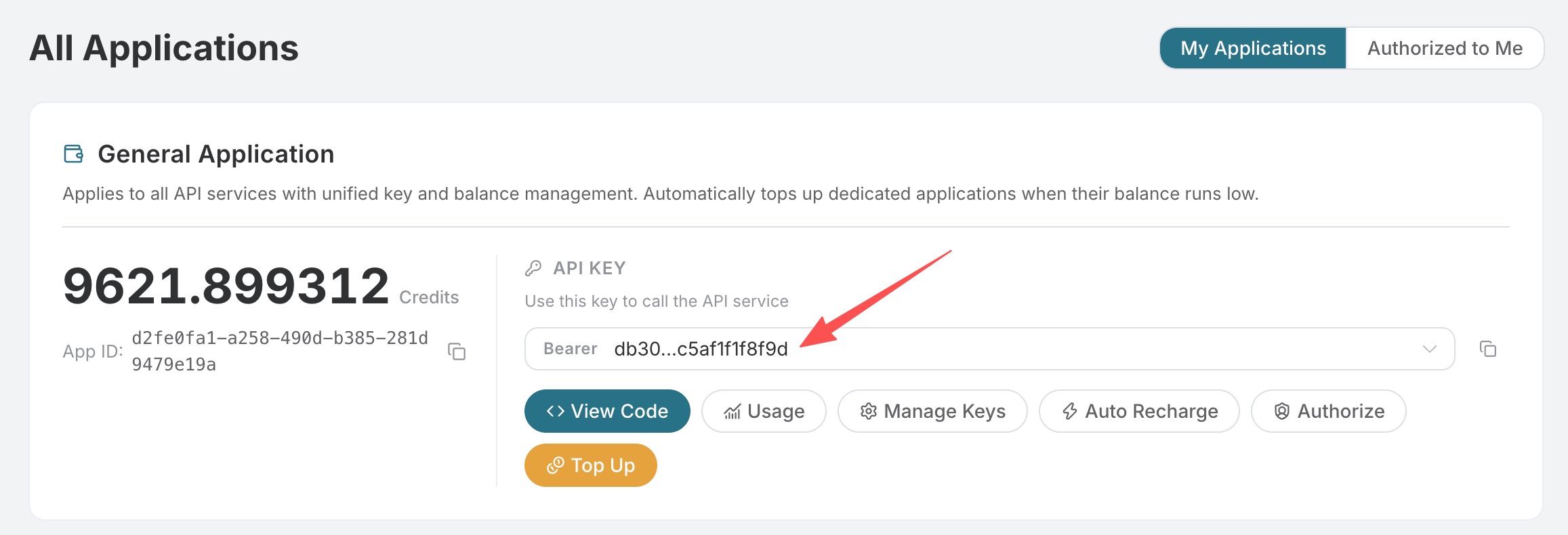 If you are not logged in or registered, you will be automatically redirected to the login page inviting you to register and log in, and after completion, you will be automatically returned to the current page.
One API Token can call all services on the platform without needing to apply separately for each service. The first application will grant a free quota for a trial experience; when the quota is insufficient, you can recharge the general balance in the console.
If you are not logged in or registered, you will be automatically redirected to the login page inviting you to register and log in, and after completion, you will be automatically returned to the current page.
One API Token can call all services on the platform without needing to apply separately for each service. The first application will grant a free quota for a trial experience; when the quota is insufficient, you can recharge the general balance in the console.
📘 Complete documentation: ID Card Portrait Photo Verification API →
Basic Usage
First, understand the basic usage method, which is to input the link to the ID card image to obtain the processed verification result. You need to simply pass aimage_url field, and we can then fill in the corresponding content on the interface, as shown in the figure:
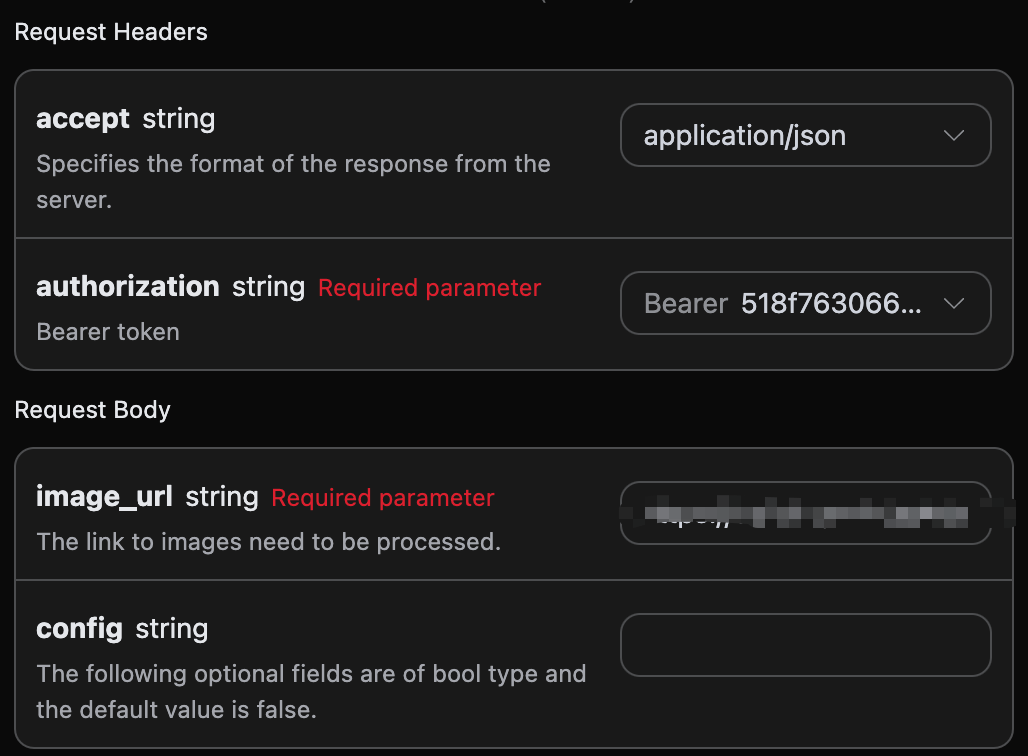
accept: the format of the response result you want to receive, here filled asapplication/json, which is in JSON format.authorization: the key to call the API, which can be directly selected after application.
image_url: the link to the ID card image that needs to be processed.config: optional configuration items, boolean fields, all default to false, supportingcopy_warn,border_check_warn,reshoot_warn,detect_ps_warn,temp_id_warn,quality(threshold 0-100).
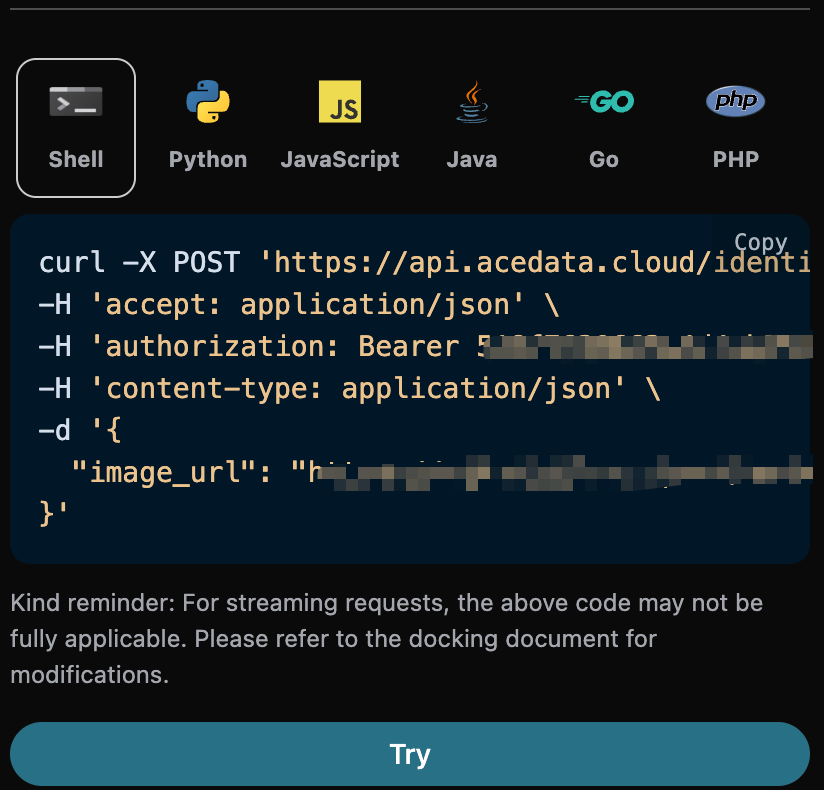
sim, similarity, range [0.00, 100.00]. It is recommended that a similarity of 70 or above can be judged as the same person, and the threshold can be adjusted according to specific scenarios (the false acceptance rate at a threshold of 70 is one in a thousand, and at a threshold of 80, it is one in ten thousand).result, business error code, returns Success in case of success; for error situations, please refer to the FailedOperation section in the error code list below.description, the result of the verification of the name and ID card number here.name, the name information in the ID card; it will be empty if no ID card image is uploaded.sex, the gender information in the ID card; it will be empty if no ID card image is uploaded.nation, the ethnic information in the ID card; it will be empty if no ID card image is uploaded.birth, the birthday information in the ID card; it will be empty if no ID card image is uploaded.address, the home address information in the ID card; it will be empty if no ID card image is uploaded.id_num, the ID card number information in the ID card; it will be empty if no ID card image is uploaded.portrait, the base64 encoding of the ID card portrait photo; if the cropping fails, the entire ID card will be used for comparison and return empty.warnings, warning information; when warning information is configured in Config, the portrait comparison will stop, and the Result will return an error (FailedOperation.OcrWarningOccurred) along with this warning information.quality, image quality score; this parameter is meaningful only when the image blur warning is configured in the request Config, with a range of (0-100); the current default threshold is 50 points, and below 50 points will trigger a blur warning.encryption, sensitive data encryption information.
Error Handling
When calling the API, if an error occurs, the API will return the corresponding error code and message. For example:400 token_mismatched: Bad request, possibly due to missing or invalid parameters.400 api_not_implemented: Bad request, possibly due to missing or invalid parameters.401 invalid_token: Unauthorized, invalid or missing authorization token.429 too_many_requests: Too many requests, you have exceeded the rate limit.500 api_error: Internal server error, something went wrong on the server.